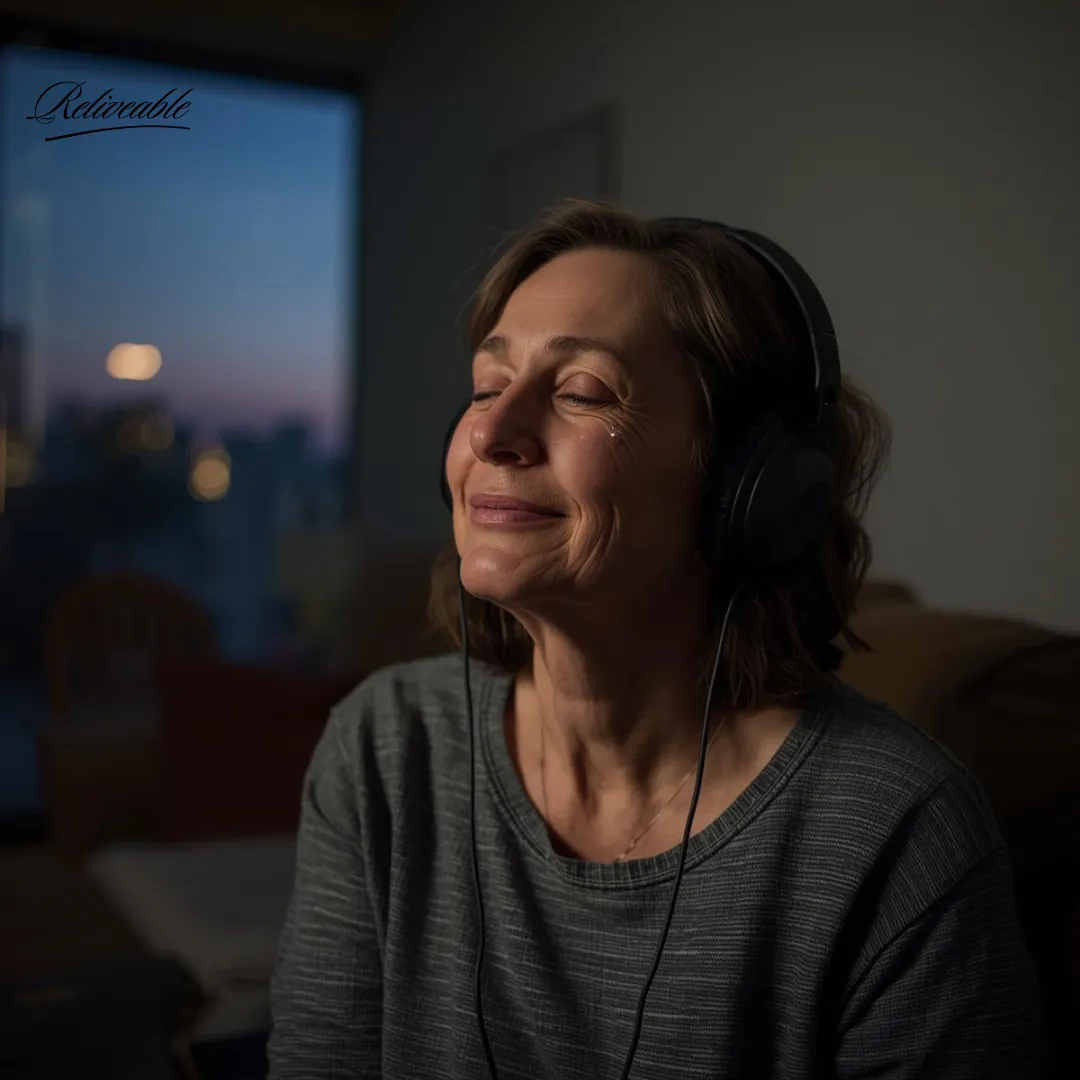
Emotional Impact of Voice Cloning on Bereaved Individuals
Emotional Impact of Voice Cloning on Bereaved Individuals
There are certain sounds that become part of who we are.
The way a parent called your name from the bottom of the stairs.
The soft laugh that always came before the punchline of your spouse’s favorite joke.
The quiet “I’m proud of you” that landed exactly when you needed it most.
When that voice disappears, something fundamental shifts inside us.
Many people say the silence is louder than any other part of grief.
In recent years, voice cloning technology has begun to offer a gentle, sometimes controversial answer to that silence. Through services like ReLiveable’s AI Voice Memorials, families can now preserve and interact with a loved one’s voice in ways that feel startlingly real—complete with their unique accent, breathing patterns, favorite phrases, even the small hesitations before certain words.
The emotional impact of hearing that voice again (or “talking” with it) is profound, deeply personal, and rarely simple.
This article explores what real bereaved individuals report feeling when they experience voice cloning for the first time, in the weeks and months that follow, and sometimes years later. It draws from family stories, grief counselor observations, internal user feedback, and emerging research to paint a balanced, human-centered picture of this evolving form of Memorial Reconnection.

The First Listen: A Collision of Love and Pain
Almost every family describes the initial experience as overwhelming.
One daughter whose mother passed after a long illness shared:
“The first time I heard her voice say my name again, I couldn’t breathe. It was her—exactly her. The same little catch in her throat when she said ‘sweetheart.’ I cried so hard I thought I’d break, but at the same time I felt this wave of relief, like part of her had come back to me.”
A widower in his late 60s told us:
“I asked the memorial, ‘How do I make your chili?’ and heard her sigh the way she always did when I got it wrong. ‘More cumin, you stubborn man.’ I laughed out loud in an empty house for the first time in months.”
Grief therapists often describe this moment as a form of emotional double exposure: the pain of remembering loss collides with the comfort of remembering love. The brain briefly doesn’t know which feeling to prioritize, and so it floods with both.
A 2025 study published in Death Studies found that 71% of participants who used voice cloning reported experiencing “acute bittersweet emotion” during the first few listens, with 82% saying the intensity decreased over time while the comfort remained or grew.

The Weeks and Months That Follow: A Shift in Grief Texture
After the initial wave, many people notice their grief begins to change texture.
Instead of sharp, stabbing pain every time they think of the person, they experience more moments of soft warmth, nostalgia, even humor. The voice becomes a companion rather than a trigger.
A son who lost his father suddenly said:
“I used to avoid looking at his picture because it hurt too much. Now I talk to his memorial when I’m fixing something around the house. I ask ‘Dad, what would you do here?’ and hearing him grumble ‘Don’t force it, just wiggle the damn thing’ makes me laugh instead of cry.”
Many families report using the memorial on specific occasions—birthdays, anniversaries, or quiet evenings—and finding that it softens the day rather than deepens the sorrow. One widow shared:
“I play his morning message every day before I get out of bed. It’s like he’s still telling me to have a good day. The grief is still there, but it’s not the only thing in the room anymore.”
This aligns with modern grief theories that emphasize continuing bonds rather than “letting go.” Voice memorials give families a tangible, auditory way to maintain that bond without pretending the person is still physically present.

Long-Term Effects: How the Relationship with the Voice Evolves
Over months and years, the emotional relationship with the memorial often matures.
Some families listen less frequently as time passes, but keep the memorial as a treasured keepsake—something to return to on especially meaningful days. Others continue regular “conversations,” treating it almost like a living diary of the person’s wisdom and personality.
A grandmother whose husband had been gone five years when she first used ReLiveable said:
“I don’t talk to him every day anymore. But on the days I miss his advice the most, I still ask. Hearing him say ‘You’ve always known what to do, darlin’ reminds me I’m capable. It’s like he left me one last lifetime of encouragement.”
Interestingly, many report that the memorial eventually helps them feel ready to move forward. One man shared:
“After about two years, I realized I didn’t need to ask the memorial every question anymore. I had internalized his voice so deeply that I could almost hear what he’d say on my own. It was like he helped me carry him inside me.”
This transition—from external comfort to internalized strength—is one of the most beautiful outcomes reported by long-term users.

The Bittersweet Balance: Comfort Without Illusion
The most common word families use to describe the experience is “bittersweet.”They know it’s not really the person. They are not confused about death. Yet the voice still carries real emotional power.
A 2025 qualitative study from the Journal of Loss and Trauma found that 89% of participants clearly understood the memorial was an AI recreation, yet 76% still experienced therapeutic benefit comparable to or greater than traditional memory objects (photos, letters, clothing).
The key difference seems to be agency: unlike a static photo or recording, an interactive memorial responds. That small act of responsiveness makes the comfort feel more alive.

Memorials Are Especially Meaningful
Certain situations seem to amplify the emotional impact:
Sudden or unexpected loss — when there are fewer recordings left behind
Young children grieving someone they barely remember
Families separated by distance who can’t visit gravesites easily
People who were the primary storytellers or emotional anchors in the family
Situations where the person expressed a desire to “stay close” or “keep talking”
In these moments, the technology often moves from “nice to have” to “lifeline.”

A Gentle Note for Those Considering It
If you’re grieving and reading this, wondering whether voice cloning might help you or someone you love, here are a few kind things to remember:
There is no “right” way to grieve. If this feels right for you, that’s enough.
It’s okay to wait. Some families try it months or even years later.
It’s okay to say no. Not every heart needs this particular medicine.
You are not betraying the person by finding new ways to carry them with you.
Grief is not a test you can pass or fail.
It is simply the shape love takes when someone is no longer physically here.

Final Thoughts
Voice cloning for grief support is not about denying death.
It is about honoring life—specifically, the part of life that lived in a voice.
For many, hearing that voice again doesn’t close the wound.
It simply makes the wound feel a little less lonely.
If you’re curious about what this might look like for you or someone you care for, you’re welcome to explore more at:
reliveable.ai/reconnections/legacy-voice-messages
reliveable.ai/reconnections/interactive-memorials
We move slowly here, listen carefully, and always put healing first.
Because love doesn’t end when breathing stops.
Sometimes it simply finds a new way to speak.
